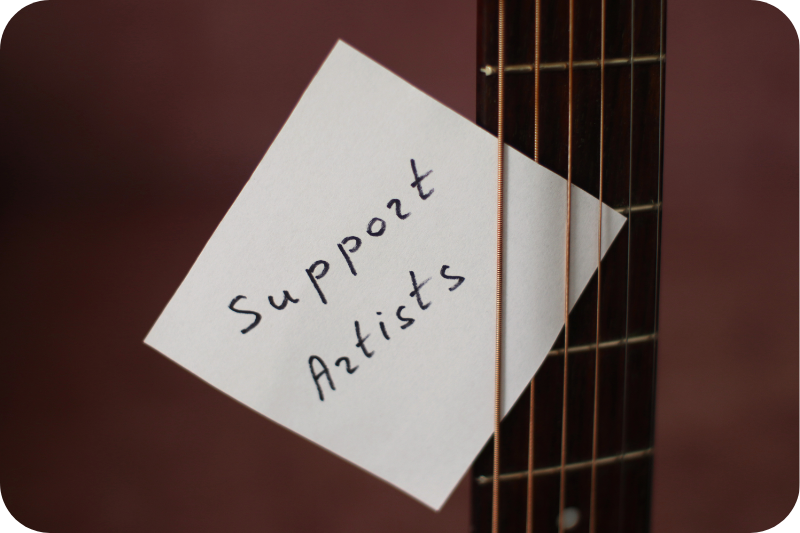
Beyond Buying Art: 10 Ways to Support an Artist You Believe In
Buying an artist’s work is one of the most direct ways to support their career. But not everyone has the money to buy a painting, book, record, print, or handmade piece every time they discover someone they love.
That doesn’t mean there’s nothing you can do.
Artists need audiences, opportunities, introductions, recommendations, collaborators, and people who continue to show up for their work. In fact, artist support can take many forms beyond a transaction. Attending an exhibition, sharing someone’s work with the right person, recommending them for an opportunity, or simply staying interested in what they’re making can all contribute to a creative career.
Here are ten ways to support an artist you believe in, whether you have money to spend or not.
1. Show Up for Their Work
One of the simplest things you can do is actually go.
Go to the exhibition. Buy the ticket to the show. Attend the screening, concert, reading, performance, open studio, or gallery opening. If they are hosting something online, tune in.
Artists spend an enormous amount of time making work that eventually has to meet an audience. Being part of that audience matters.
For independent galleries and creative spaces, regular attendance also helps build the community around an artist’s work. You don’t have to buy anything when you walk through the door. Looking closely, asking questions, and bringing someone with you are all meaningful forms of participation.
2. Share Their Work With Intention
Sharing an artist’s post takes seconds. Sharing it with the right person can take their work somewhere completely different.
Instead of simply reposting something and moving on, think about who might actually care about it. Send a musician’s new track to the friend who books events. Send a designer’s portfolio to someone looking for branding. Tell a curator about a visual artist whose work fits an upcoming exhibition.
And when you post their work publicly, tag them properly and say what you actually like about it. A genuine recommendation carries more weight than a generic “support this artist” post.
If you want to understand why visibility matters so much to creative careers, we’ve explored that in Visibility Isn’t Talent: How Discovery Actually Works for Artists Online.
3. Buy the Small Thing If You Can
Supporting an artist financially doesn’t always mean buying their most expensive work.
Maybe you can’t afford the original painting, but you can buy a print. Maybe the record is out of your budget, but you can buy a digital release or piece of merchandise. Maybe you can’t commission a full project, but you can pay for a smaller one.
The point is to meet the artist where your budget actually is.
When you do buy, buying directly from the artist, their studio, or an event where they are selling their work can be particularly valuable. The more directly your money reaches the creative person, the more meaningful the transaction can be.
4. Commission Them for Something
You don’t need to wait for an artist to have exactly what you want available for sale.
Commission them.
A photographer might shoot portraits for you. A musician might perform at an event. An illustrator might create something personal. A designer might work on a project. A dancer or choreographer might teach a private session.
Commissioning turns appreciation into paid creative work, and it can give an artist a project they can add to their professional experience at the same time.
If you already know someone whose work you love, ask what they offer. You might find there’s a way to work together that neither of you had considered.
5. Recommend Them for Opportunities
Sometimes the most valuable thing you can give an artist is a name.
If you hear about an open call, residency, exhibition, performance, commission, teaching position, grant, or freelance opportunity that fits someone you know, send it to them.
Better yet, recommend them when someone else is looking.
Creative careers are heavily influenced by networks and word of mouth. Artists rely on their communities to share information, make introductions, recommend them for opportunities, and connect them with people they may not otherwise reach.
You don’t need to be a curator or industry insider to make an introduction. You just need to know good work when you see it.
6. Bring Someone With You
Found an artist you love? Don’t keep them to yourself.
Bring a friend to their next show. Take someone to their performance. Send their exhibition details to your group chat. Invite someone to a screening or reading.
This sounds small, but it changes the size of an artist’s audience one person at a time.
It also makes creative events feel less intimidating for people who might not normally go alone. One person saying “come with me” can be enough to introduce someone to an artist, venue, or entire creative community they wouldn’t have discovered otherwise.
7. Offer a Skill You Already Have
Not every form of support needs to involve money.
If you’re good at photography, help an artist document their work. If you understand social media, help them think through a campaign. If you’re a designer, offer feedback on their portfolio. If you know your way around contracts, accounting, websites, production, or communications, there may be something useful you can contribute.
The important part is understanding what the artist actually needs before jumping in.
Support should make their work easier, not create another obligation for them.
There are already models of artist support built around this kind of in-kind help, including professional skills, volunteering, advice, and access to resources.
8. Keep Following After the Big Moment
An artist’s career is not made up of opening nights.
The exhibition ends. The album comes out. The film premieres. The performance finishes.
Then the artist goes back to work.
Keep following them after the exciting announcement disappears from your feed. Subscribe to their newsletter. Follow their next project. Listen to the next release. Check in when they announce something new.
For musicians, for example, following mailing lists, livestreams, social channels, and future events can help artists build audiences beyond a single release.
Long-term attention is much more useful than one moment of hype.
9. Support the Places That Support Artists
Artists rarely work completely alone.
There are galleries, theatres, studios, independent venues, artist-run spaces, community organisations, festivals, creative collectives, and other institutions creating opportunities around them.
Support those spaces too.
Join the mailing list. Attend their events. Bring friends. Volunteer when you can. Share their programming. If they have a membership, consider joining.
When these spaces have an active audience, they have more reason and ability to keep creating opportunities for artists. Regular attendance and community engagement can matter even when you never make a purchase.
10. Keep Talking About the Artist
Maybe the most underrated form of support is simply continuing the conversation.
Tell people why you like their work.
Mention them when someone asks for a recommendation. Talk about their exhibition after you leave. Send their music to a friend. Bring up their work in a conversation where it actually fits.
Artists need people who believe their work is worth talking about.
You don’t need thousands of followers to create that kind of momentum. You just need to be willing to say, “You should see this.”
Supporting Artists Is About More Than Buying
Buying art will always be an important way to support creative work. But it isn’t the only one.
Artists need people in their corner at every stage of their careers, people who attend, recommend, share, connect, collaborate, commission, and keep paying attention.
And sometimes the most useful thing you can give an artist costs nothing at all: your time, your attention, or an introduction to someone who can open the next door.
Creative careers are built through communities. If you believe in someone’s work, show them that you do, and keep showing up.
At DiMi, we’re building a space where artists and creative professionals can connect, discover opportunities, collaborate, and build careers that actually last.
